
Solar Panels for Home in Indore: Complete Residential Solar Guide
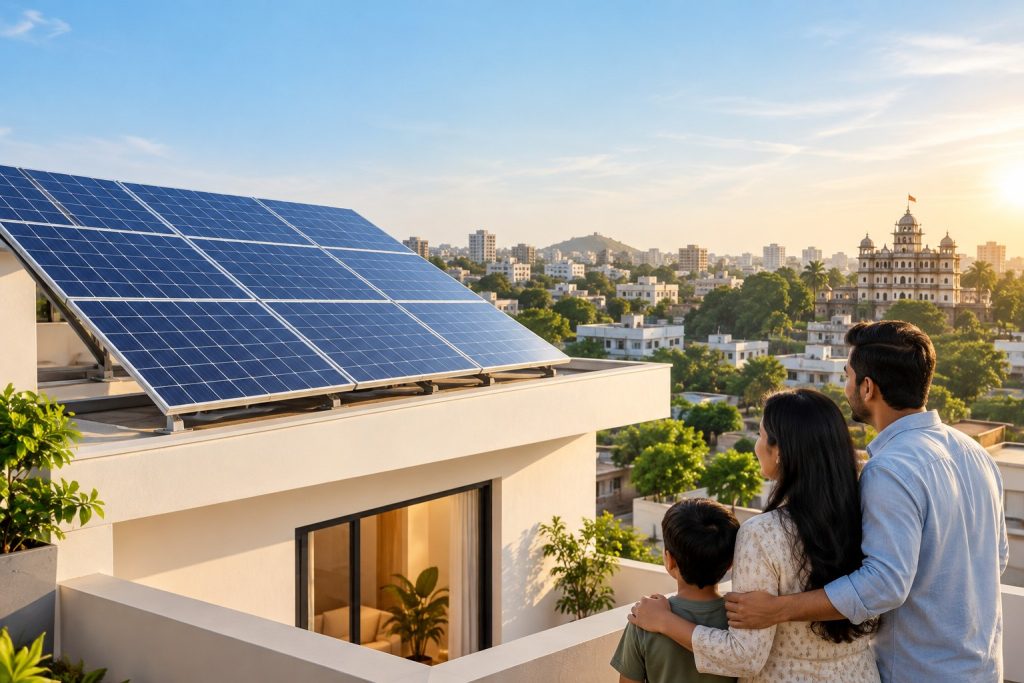
At Indian Solar Solution, we talk to homeowners across Indore every week who are exploring solar panels for home in Indore for the first time. Rising electricity bills, frequent tariff hikes, and growing awareness about clean energy have made residential solar systems one of the smartest home upgrades a family can make today. This guide covers everything you need to know before you get solar panels for your home: how they work, why they matter, and how to choose the best solar system for your home.
What Are Residential Solar Panels?
Residential solar panels are photovoltaic (PV) systems installed on rooftops or open spaces of homes to convert sunlight into usable electricity. Unlike large-scale commercial installations, a home solar power system is sized specifically to match a household’s daily energy consumption.
At Indian Solar Solution, we design residential solar panel installation projects around three core components:
- Solar panels capture sunlight and generate DC electricity
- An inverter converts DC power into usable AC power for home appliances
- Mounting structure and wiring secure panels and safely connect the system to your home’s electrical setup
Depending on your goals, we help homeowners choose between on-grid, off-grid, or hybrid residential solar systems.
How Does a Home Solar Power System Work?
Understanding the process makes it easier to see why residential solar energy is such a reliable long-term investment.
Step-by-Step Working
- Sunlight hits the panels – Solar cells absorb sunlight and generate direct current (DC) electricity.
- Inverter conversion: The inverter converts DC electricity into alternating current (AC), which powers your home appliances.
- Power usage or export: Electricity is used in real time; any surplus can be exported to the grid (in on-grid systems) or stored in batteries (in off-grid or hybrid systems).
- Net metering: For grid-connected homes, excess units are credited through net metering, reducing your monthly electricity bill.
This simple, low-maintenance cycle is why residential solar power has become such a practical choice for households across Indore and Madhya Pradesh.
Why Residential Solar Panels Matter
Choosing solar panels for my home isn’t just an environmental decision anymore; it’s a financial one too. With electricity tariffs rising steadily, a well-designed residential solar power system can significantly reduce dependency on grid electricity while offering long-term savings.
At Indian Solar Solution, we’ve seen firsthand how homeowners benefit once they switch:
- Lower monthly electricity bills within the first year
- Protection against future tariff hikes
- Increased property value
- A meaningful reduction in household carbon footprint
Key Benefits of Residential Solar Systems
1. Long-Term Cost Savings
A quality residential solar panel installation typically pays for itself within 4–6 years, after which the electricity generated is essentially free.
2. Government Subsidies and Incentives
Many homeowners qualify for federal and state subsidies, making the best residential solar panels more affordable than most people expect.
3. Low Maintenance
Modern solar panels require minimal upkeep; occasional cleaning and an annual check-up are usually enough to keep performance optimal.
4. Reliable Power Backup
Hybrid and off-grid residential solar systems can be paired with battery storage, ensuring power availability even during outages.
5. Environmental Impact
Every home solar power system reduces reliance on fossil-fuel-based electricity, contributing to cleaner air and a smaller carbon footprint.
Common Misconceptions About Residential Solar Energy
Solar panels don’t work on cloudy days.
They do at reduced efficiency, not zero output. Indore’s high annual sunshine hours make it well-suited for solar.
Installation is too expensive.
With subsidies, financing options, and falling equipment costs, the best solar system for home use is now accessible to a much wider range of budgets than a few years ago.
Solar panels need constant maintenance.
In reality, most systems only need periodic cleaning and a yearly professional inspection.
How to Choose the Best Solar System for Your Home
When homeowners come to Indian Solar Solution to get solar panels for their home, we evaluate:
- Average monthly electricity consumption
- Available rooftop space and sunlight exposure
- Budget and subsidy eligibility
- On-grid vs. off-grid vs. hybrid requirements
This ensures every residential solar panel installation is customized, not generic.
Conclusion
Switching to solar panels for a home in Indore is one of the most practical steps a household can take toward long-term savings and energy independence. From understanding how a home solar power system works to recognizing the real benefits of residential solar energy, this guide covers the essentials you need before making a decision. At Indian Solar Solution, we’re committed to helping Indore homeowners find the best residential solar panels suited to their specific needs, combining quality installation, transparent guidance, and dependable after-sales support. If you’re ready to explore residential solar power for your home, our team is here to help you every step of the way.