
Best Solar System for Home: How to Choose the Right One for Your Needs
Every month, the electricity bill arrives, and the same question comes up: is there a smarter way to power my home? At Indian Solar Solution, we hear this from families across Indore almost daily. The good news is that the best solar system for home isn’t a single product. It’s the system that fits your roof, your consumption, and your budget. This guide walks you through how to find it. What Is the Best Solar System for Home? The best solar system for a home is one designed around how your household actually uses energy. A system that suits a large bungalow will be wasteful for a compact apartment, and the reverse is also true. A complete home solar power system usually includes: How Does a Home Solar Power System Work? The process is simpler than most people expect. Step 1: Panels Capture Sunlight Residential solar panels contain photovoltaic cells that turn sunlight into direct current (DC) electricity. Step 2: The Inverter Converts Power The inverter changes DC into alternating current (AC), which runs your lights, fans, AC units and appliances. Step 3: Surplus Goes to the Grid In a grid-connected setup, extra electricity flows to the grid. Net metering credits you for it, which lowers your next bill. Types of Solar Systems: Which Suits You? On-Grid Systems These connect to the utility grid and are the most popular choice for city homes. They cost less and need little equipment. However, they shut down during a grid outage for safety reasons. Off-Grid Systems These run independently with battery storage. They suit remote locations or homes with frequent power cuts, but batteries raise the upfront cost. Hybrid Systems Hybrid systems combine grid connection with battery backup. They offer flexibility and are worth considering if outages are a regular problem. How to Choose the Right System: 5 Practical Checks 1. Review Your Electricity Bills Look at your last 12 months of bills. Your average monthly units decide the system size. As a rough guide, a 3 kW system suits many small to mid-sized homes, though your own numbers matter more than any rule of thumb. 2. Measure Your Usable Roof Space A 1 kW system generally needs around 80–100 sq. ft. of shadow-free space. Trees, water tanks and nearby buildings can reduce output. 3. Compare Panel Quality Mono PERC panels are efficient and space-friendly. Poly panels can be more budget-friendly. Look for reputable brands and solid warranties. 4. Check Subsidies and Approvals Government schemes can reduce your net cost for eligible rooftop installations. Your installer should guide you through the paperwork and net metering approvals. 5. Choose a Trusted Installer Installation quality affects performance for years. Ask about past projects, warranties and after-sales support. Why Solar Is Worth It for Indian Homes Indore receives strong sunlight for much of the year, which makes the best solar system for home in Indore a practical long-term investment. Here is what homeowners typically gain: Common Misconceptions About Home Solar Solar doesn’t work on cloudy days. Output dips, but panels still generate power in diffused light. Solar needs constant repairs. Solar systems are durable. Still, regular solar maintenance keeps them efficient. Bigger is always better. An oversized system can waste money. Right-sizing is what delivers the best return. Why Solar Maintenance Matters Dust, bird droppings, and loose connections can quietly cut your energy output over time. Simple solar power maintenance protects your investment: Many owners prefer professional solar maintenance services because trained technicians can spot problems early and keep performance steady. At Indian Solar Solution, we provide installation as well as ongoing support, so your system continues to perform long after commissioning. Why Homeowners Trust Indian Solar Solution As an Indore-based solar installer, we understand local weather, roof types, and power needs. Our team surveys your property, designs a system around your consumption, and manages installation, approvals, and after-sales care. We keep our recommendations honest, and that includes telling you when a smaller system is enough. Conclusion Choosing the best solar system for home comes down to a few clear decisions: know your consumption, measure your roof, pick quality components, understand subsidies, and work with a dependable installer. Add regular maintenance, and your system can serve your family for 25 years or more. Ready to see what fits your home? Contact Indian Solar Solution for a free site assessment and a tailored recommendation.
Solar Panels for Home in Indore: Complete Residential Solar Guide
At Indian Solar Solution, we talk to homeowners across Indore every week who are exploring solar panels for home in Indore for the first time. Rising electricity bills, frequent tariff hikes, and growing awareness about clean energy have made residential solar systems one of the smartest home upgrades a family can make today. This guide covers everything you need to know before you get solar panels for your home: how they work, why they matter, and how to choose the best solar system for your home. What Are Residential Solar Panels? Residential solar panels are photovoltaic (PV) systems installed on rooftops or open spaces of homes to convert sunlight into usable electricity. Unlike large-scale commercial installations, a home solar power system is sized specifically to match a household’s daily energy consumption. At Indian Solar Solution, we design residential solar panel installation projects around three core components: Depending on your goals, we help homeowners choose between on-grid, off-grid, or hybrid residential solar systems. How Does a Home Solar Power System Work? Understanding the process makes it easier to see why residential solar energy is such a reliable long-term investment. Step-by-Step Working This simple, low-maintenance cycle is why residential solar power has become such a practical choice for households across Indore and Madhya Pradesh. Why Residential Solar Panels Matter Choosing solar panels for my home isn’t just an environmental decision anymore; it’s a financial one too. With electricity tariffs rising steadily, a well-designed residential solar power system can significantly reduce dependency on grid electricity while offering long-term savings. At Indian Solar Solution, we’ve seen firsthand how homeowners benefit once they switch: Key Benefits of Residential Solar Systems 1. Long-Term Cost Savings A quality residential solar panel installation typically pays for itself within 4–6 years, after which the electricity generated is essentially free. 2. Government Subsidies and Incentives Many homeowners qualify for federal and state subsidies, making the best residential solar panels more affordable than most people expect. 3. Low Maintenance Modern solar panels require minimal upkeep; occasional cleaning and an annual check-up are usually enough to keep performance optimal. 4. Reliable Power Backup Hybrid and off-grid residential solar systems can be paired with battery storage, ensuring power availability even during outages. 5. Environmental Impact Every home solar power system reduces reliance on fossil-fuel-based electricity, contributing to cleaner air and a smaller carbon footprint. Common Misconceptions About Residential Solar Energy Solar panels don’t work on cloudy days. They do at reduced efficiency, not zero output. Indore’s high annual sunshine hours make it well-suited for solar. Installation is too expensive. With subsidies, financing options, and falling equipment costs, the best solar system for home use is now accessible to a much wider range of budgets than a few years ago. Solar panels need constant maintenance. In reality, most systems only need periodic cleaning and a yearly professional inspection. How to Choose the Best Solar System for Your Home When homeowners come to Indian Solar Solution to get solar panels for their home, we evaluate: This ensures every residential solar panel installation is customized, not generic. Conclusion Switching to solar panels for a home in Indore is one of the most practical steps a household can take toward long-term savings and energy independence. From understanding how a home solar power system works to recognizing the real benefits of residential solar energy, this guide covers the essentials you need before making a decision. At Indian Solar Solution, we’re committed to helping Indore homeowners find the best residential solar panels suited to their specific needs, combining quality installation, transparent guidance, and dependable after-sales support. If you’re ready to explore residential solar power for your home, our team is here to help you every step of the way.
Residential Solar Panel Installation: A Complete Home Guide
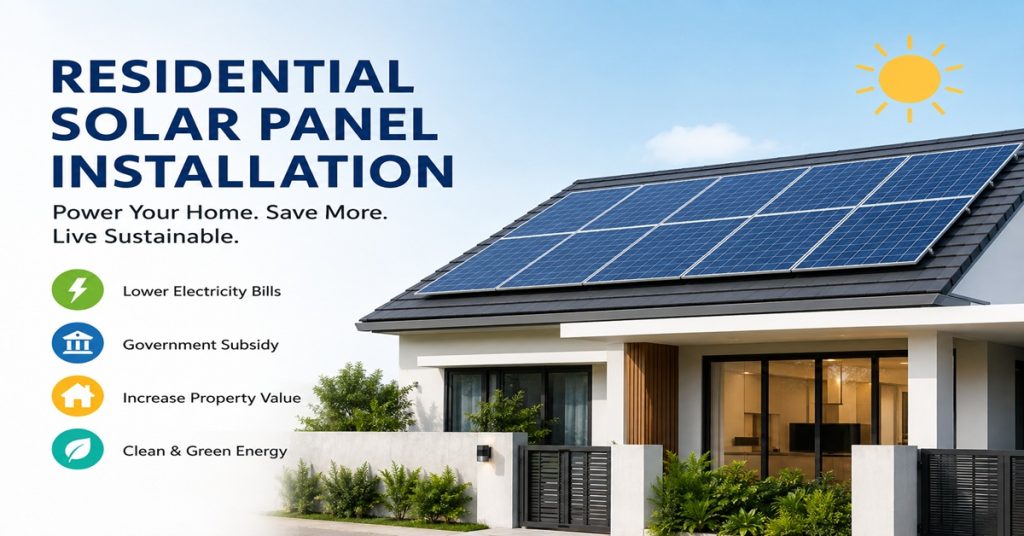
Residential Solar Panel Installation If you’ve been researching residential solar panel installation, you’ve probably noticed how many homeowners are switching to solar every year. Rising electricity bills and growing awareness of clean energy have made home solar power systems one of the smartest long-term investments a household can make. At Indian Solar Solution, we’ve guided hundreds of homeowners across Indore through this exact journey, and this guide breaks down everything you need to know before getting started. What Is Residential Solar Panel Installation? Residential solar panel installation is the process of setting up solar panels on your rooftop to generate electricity directly from sunlight. Instead of relying entirely on grid power, your home draws energy from panels that convert sunlight into usable electricity, cutting your monthly bills and reducing dependence on the traditional power grid. Today, more families are actively searching for solar panels for home in Indore, driven by frequent tariff hikes and a growing preference for sustainable living. Whether you’re building a new house or retrofitting an existing one, residential solar has become a practical, accessible upgrade. How Does a Home Solar Power System Work? A typical residential solar system works through a simple but effective process: This straightforward cycle is why residential solar power systems require minimal daily involvement once installed correctly. Components of a Home Solar Setup Why Residential Solar Energy Matters for Homeowners Choosing residential solar energy isn’t just an environmental decision anymore it’s a financial one too. With electricity tariffs rising steadily across Madhya Pradesh, homeowners are looking for ways to lock in predictable, lower energy costs for the next 20-25 years, which is the average lifespan of a well-maintained solar system. Key Benefits of Installing Solar Panels at Home 1. Lower Electricity Bills Once installed, your home solar power system significantly cuts your dependency on grid electricity, often reducing bills by 70-90%. 2. Government Subsidies Many homeowners searching for the best solar system for home are pleasantly surprised to learn about central and state subsidy schemes that reduce upfront installation costs. 3. Increased Property Value Homes with residential solar panels installed are increasingly seen as more valuable and future-ready, especially as buyers prioritize energy-efficient properties. 4. Low Maintenance Requirements Compared to other home systems, residential solar power systems require minimal upkeep; periodic cleaning and occasional inspection are usually sufficient. 5. Environmental Impact Every household that switches to solar reduces its carbon footprint, contributing to a cleaner, more sustainable Indore. Common Misconceptions About Home Solar Installation “Solar panels don’t work on cloudy days.” They still generate power on cloudy days, just at reduced efficiency they don’t need direct, harsh sunlight to function. “Installation is complicated and takes months.” With an experienced provider, most residential solar panel installation projects are completed within a few days to a couple of weeks, depending on system size. “Solar maintenance services: While some upkeep is required, it’s far less demanding than most homeowners expect, especially with a trusted local maintenance partner handling periodic checks. Choosing the Best Residential Solar Panels for Your Home If you’re wondering how to get solar panels for your home, the right choice depends on your roof space, average electricity consumption, and budget. A professional site assessment is the best way to determine the ideal system size and panel type for your specific needs, something our team at Indian Solar Solution handles as part of every consultation. Conclusion Residential solar panel installation is no longer a niche choice; it’s a practical, cost-effective solution for homeowners who want long-term savings and energy independence. From understanding how home solar power systems work to recognizing their real-world benefits, this guide covers the essentials to help you make an informed decision. If you’re ready to explore residential solar panels for your home in Indore, Indian Solar Solution is here to guide you through every step, from site assessment to installation and beyond.
Residential Solar Power Systems for Reliable and Clean Energy

In today’s world, rising electricity costs and increasing environmental concerns have made residential solar power systems one of the smartest investments for homeowners. Solar technology allows families to generate clean electricity directly from sunlight, reducing dependency on traditional power sources while lowering monthly utility bills. Whether you want energy independence, long-term savings, or a sustainable lifestyle, residential solar energy offers a reliable solution for modern homes. What Are Residential Solar Power Systems? Residential solar power systems are setups that convert sunlight into usable electricity for homes. These systems typically include solar panels, an inverter, mounting structures, and batteries in some cases. The electricity generated can power household appliances, lighting, air conditioning, and more. Modern residential solar systems are designed to operate efficiently across a range of weather conditions and can provide reliable energy for years with minimal maintenance. Homeowners today are increasingly choosing the best residential solar panels to maximise efficiency and long-term performance. How Do Residential Solar Systems Work? Understanding how residential solar power works is simple: Solar Panels Capture Sunlight Solar panels absorb sunlight and convert it into direct current (DC) electricity. Inverter Converts Electricity The inverter changes DC electricity into alternating current (AC), which is used by household appliances. Electricity Powers Your Home The generated electricity powers your home during the day, reducing your dependence on grid electricity. Excess Power Can Be Stored or Exported Some residential solar systems include battery storage, while others send excess electricity back to the grid through net metering. This process makes residential solar energy both cost-effective and environmentally friendly. Why Are Residential Solar Power Systems Important? Lower Electricity Bills One of the biggest reasons homeowners invest in residential solar power systems is to reduce electricity expenses. Solar energy can significantly cut monthly utility costs over time. Clean and Sustainable Energy Unlike fossil fuels, solar power generates clean electricity without harmful emissions. This helps reduce your carbon footprint and supports a healthier environment. Energy Independence Residential solar power allows homeowners to rely less on traditional electricity providers, especially during rising energy prices. Long-Term Investment High-quality solar systems can last 25 years or more, making them a smart long-term investment for homeowners. How to Choose the Best Residential Solar Panels Selecting the right solar panels is essential for maximising efficiency and durability. Here are a few factors to consider: Efficiency Ratings Higher-efficiency panels produce more electricity using less roof space. Durability and Warranty Choose panels with strong warranties and weather-resistant designs. Installation Expertise Professional installation ensures safety, performance, and long-term reliability. Energy Requirements Your system size should match your household energy consumption. Trusted companies like Indian Solar Solution help homeowners select suitable residential solar systems based on their energy needs and budget. Benefits of Residential Solar Energy for Modern Homes The demand for residential solar energy continues to grow because of its practical and environmental advantages. Solar-powered homes often have higher property value and lower operational costs. In addition, government incentives and subsidies make solar installations more affordable for homeowners. With expert guidance from Indian Solar Solution, families can transition smoothly to clean energy while enjoying reliable power generation throughout the year. Conclusion Investing in residential solar power systems is a smart step toward energy savings, sustainability, and long-term reliability. From reducing electricity bills to supporting a cleaner environment, solar energy offers multiple benefits for homeowners. Choosing the best residential solar panels and working with experienced professionals ensures better efficiency and lasting performance. As the future moves toward renewable energy, companies like Indian Solar Solution continue helping homeowners adopt reliable and eco-friendly residential solar power solutions with confidence.