
How an Industrial Solar System Reduces Energy Costs
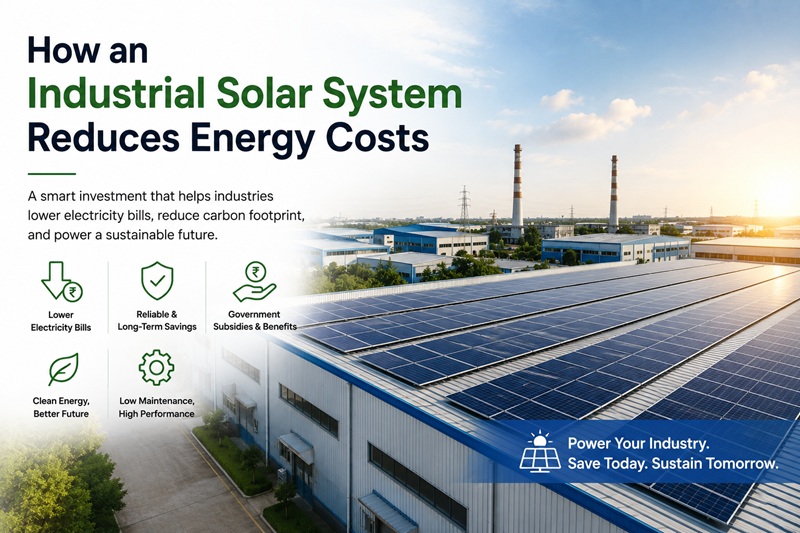
Rising electricity tariffs are squeezing the profit margins of manufacturing units, warehouses, and processing plants across India. For business owners looking at their monthly power bills with growing concern, an industrial solar system offers a practical, long-term way out. At Indian Solar Solution, we’ve worked with factories and industrial units across Indore and Madhya Pradesh to help them cut grid dependency and lower operating costs through solar power. In this article, we’ll break down what an industrial solar system is, how it works, and why it’s becoming a smart investment for energy-intensive businesses.
What Is an Industrial Solar System?
An industrial solar system is a large-scale solar power setup designed specifically for factories, manufacturing plants, warehouses, and other heavy-load industrial facilities. Unlike residential rooftop systems, industrial installations are built to handle much higher power demands, often running into hundreds of kilowatts or even multiple megawatts.
These systems are typically installed on:
- Factory rooftops
- Open industrial land or ground-mounted structures
- Carports and shed structures within industrial premises
The goal is simple: generate clean electricity on-site to power heavy machinery, HVAC systems, lighting, and production lines, reducing reliance on grid power.
How Does an Industrial Solar System Work?
An industrial solar system converts sunlight into usable electricity through a few key components working together.
Core Components
- Solar panels capture sunlight and convert it into DC electricity.
- Inverters convert DC power into AC power that industrial equipment can use.
- Mounting structures hold panels securely on rooftops or ground-mounted frames.
- Net metering setup Allows surplus power to be exported to the grid, often earning credits.
- Monitoring systems track real-time energy generation and consumption.
The Process
During daylight hours, the panels generate electricity that’s used directly for plant operations. Any excess power is either stored (in systems with battery backup) or fed back into the grid via net metering, depending on the chosen setup. This means industrial units can offset a significant chunk of their daytime power consumption, typically the peak usage period for most factories, directly from solar generation.
Why Industrial Solar Installation Matters for Businesses Today
Industrial electricity tariffs in India are among the highest across consumer categories, and they continue to rise year after year. For units running multiple shifts, this adds up to a substantial recurring cost. A well-planned industrial solar panel installation directly addresses this by generating power at a fixed, predictable cost for the next 25+ years the typical lifespan of a solar system.
Beyond cost, there’s a growing push from clients, regulators, and export markets for businesses to show genuine sustainability commitments. Having solar infrastructure in place strengthens a company’s ESG profile and can open doors to sustainability-linked contracts.
Key Benefits of an Industrial Solar System
- Lower electricity bills Solar can offset 40–90% of daytime grid consumption, depending on system size and load pattern.
- Fixed, predictable energy costs Protection against yearly tariff hikes from electricity boards.
- Fast payback period Most industrial installations recover their cost within 3–5 years, followed by two decades of near-free power.
- Low maintenance Solar systems have few moving parts and require only periodic cleaning and inspection.
- Government support: Various industrial solar subsidy schemes and accelerated depreciation benefits reduce upfront investment significantly.
- Increased property and asset value Facilities with installed renewable infrastructure are often more attractive to buyers and investors.
- Reduced carbon footprint: Supports compliance with environmental norms and corporate sustainability goals.
Choosing the Right Industrial Solar Companies
Not every solar provider has the engineering depth needed for large industrial loads. When evaluating industrial solar companies, businesses should look at:
- Experience with similar-scale industrial projects
- In-house design and structural engineering capability
- After-sales service and maintenance support
- Assistance with subsidy documentation and net metering approvals
- Warranty terms on panels and inverters
As a locally based provider, Indian Solar Solution has hands-on experience delivering industrial solar installation Indore and surrounding industrial belts, helping clients navigate everything from site assessment to subsidy applications and final commissioning.
Common Misconceptions About Industrial Solar
Solar can’t handle heavy industrial loads. In reality, industrial-grade systems are engineered specifically for high-capacity, continuous operation.
It’s too expensive to install. With subsidy schemes and depreciation benefits, upfront costs are considerably lower than most business owners assume, and financing options are widely available.
Maintenance is complicated. Industrial solar systems are largely self-sufficient, needing only periodic panel cleaning and routine inspections.
Conclusion
An industrial solar system isn’t just an environmental choice anymore; it’s a sound financial decision for businesses looking to control rising energy costs. From lower electricity bills and government subsidies to long-term price stability, the benefits compound year after year. If your facility is ready to explore industrial solar panel installation, Indian Solar Solution can guide you through site evaluation, system design, subsidy support, and installation, turning your rooftop or open industrial land into a long-term cost-saving asset.