
Residential Solar Panel Installation: A Complete Home Guide
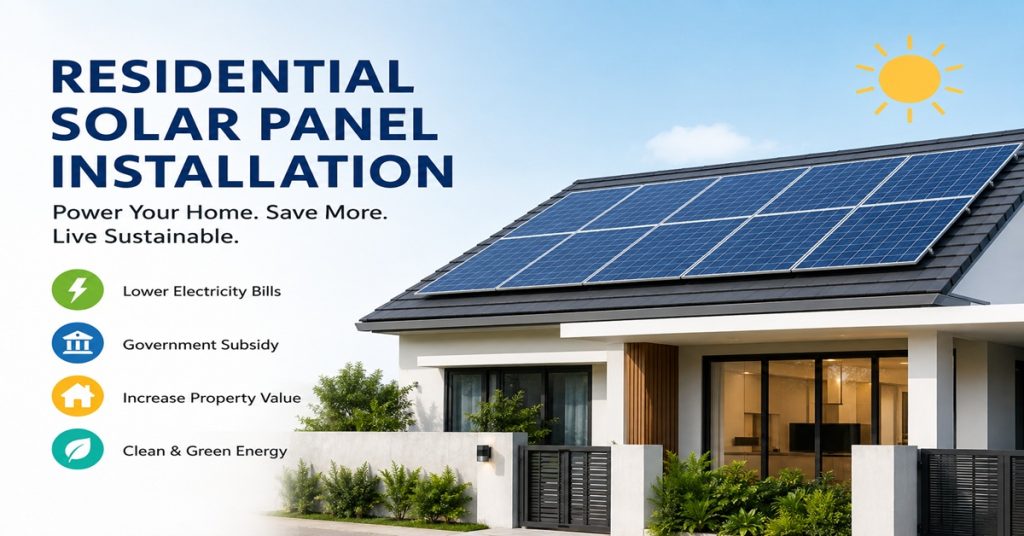
Residential Solar Panel Installation
If you’ve been researching residential solar panel installation, you’ve probably noticed how many homeowners are switching to solar every year. Rising electricity bills and growing awareness of clean energy have made home solar power systems one of the smartest long-term investments a household can make. At Indian Solar Solution, we’ve guided hundreds of homeowners across Indore through this exact journey, and this guide breaks down everything you need to know before getting started.
What Is Residential Solar Panel Installation?
Residential solar panel installation is the process of setting up solar panels on your rooftop to generate electricity directly from sunlight. Instead of relying entirely on grid power, your home draws energy from panels that convert sunlight into usable electricity, cutting your monthly bills and reducing dependence on the traditional power grid.
Today, more families are actively searching for solar panels for home in Indore, driven by frequent tariff hikes and a growing preference for sustainable living. Whether you’re building a new house or retrofitting an existing one, residential solar has become a practical, accessible upgrade.
How Does a Home Solar Power System Work?
A typical residential solar system works through a simple but effective process:
- Sunlight capture – Solar panels absorb sunlight using photovoltaic (PV) cells.
- DC to AC conversion – An inverter converts the direct current (DC) generated by the panels into alternating current (AC), which powers your home appliances.
- Power distribution – The converted electricity flows through your home’s electrical panel, just like grid power.
- Net metering (optional) – Any surplus energy your system generates can be sent back to the grid, often earning you credits on your electricity bill.
This straightforward cycle is why residential solar power systems require minimal daily involvement once installed correctly.
Components of a Home Solar Setup
- Solar panels (monocrystalline or polycrystalline)
- Inverter (string or microinverter)
- Mounting structure
- Net metering unit
- Wiring and safety equipment
Why Residential Solar Energy Matters for Homeowners
Choosing residential solar energy isn’t just an environmental decision anymore it’s a financial one too. With electricity tariffs rising steadily across Madhya Pradesh, homeowners are looking for ways to lock in predictable, lower energy costs for the next 20-25 years, which is the average lifespan of a well-maintained solar system.
Key Benefits of Installing Solar Panels at Home
1. Lower Electricity Bills
Once installed, your home solar power system significantly cuts your dependency on grid electricity, often reducing bills by 70-90%.
2. Government Subsidies
Many homeowners searching for the best solar system for home are pleasantly surprised to learn about central and state subsidy schemes that reduce upfront installation costs.
3. Increased Property Value
Homes with residential solar panels installed are increasingly seen as more valuable and future-ready, especially as buyers prioritize energy-efficient properties.
4. Low Maintenance Requirements
Compared to other home systems, residential solar power systems require minimal upkeep; periodic cleaning and occasional inspection are usually sufficient.
5. Environmental Impact
Every household that switches to solar reduces its carbon footprint, contributing to a cleaner, more sustainable Indore.
Common Misconceptions About Home Solar Installation
“Solar panels don’t work on cloudy days.”
They still generate power on cloudy days, just at reduced efficiency they don’t need direct, harsh sunlight to function.
“Installation is complicated and takes months.”
With an experienced provider, most residential solar panel installation projects are completed within a few days to a couple of weeks, depending on system size.
“Solar maintenance services: While some upkeep is required, it’s far less demanding than most homeowners expect, especially with a trusted local maintenance partner handling periodic checks.
Choosing the Best Residential Solar Panels for Your Home
If you’re wondering how to get solar panels for your home, the right choice depends on your roof space, average electricity consumption, and budget. A professional site assessment is the best way to determine the ideal system size and panel type for your specific needs, something our team at Indian Solar Solution handles as part of every consultation.
Conclusion
Residential solar panel installation is no longer a niche choice; it’s a practical, cost-effective solution for homeowners who want long-term savings and energy independence. From understanding how home solar power systems work to recognizing their real-world benefits, this guide covers the essentials to help you make an informed decision. If you’re ready to explore residential solar panels for your home in Indore, Indian Solar Solution is here to guide you through every step, from site assessment to installation and beyond.