
Solar Panels vs Generators
If you are planning a home solar power system in Indore, you might be wondering whether solar panels vs generators can handle all your home energy requirements. With rising electricity costs, occasional power outages, and environmental concerns, selecting a dependable, cost-effective backup solution is essential. This article will answer common questions and provide a detailed comparison between generators and solar panels with battery storage.
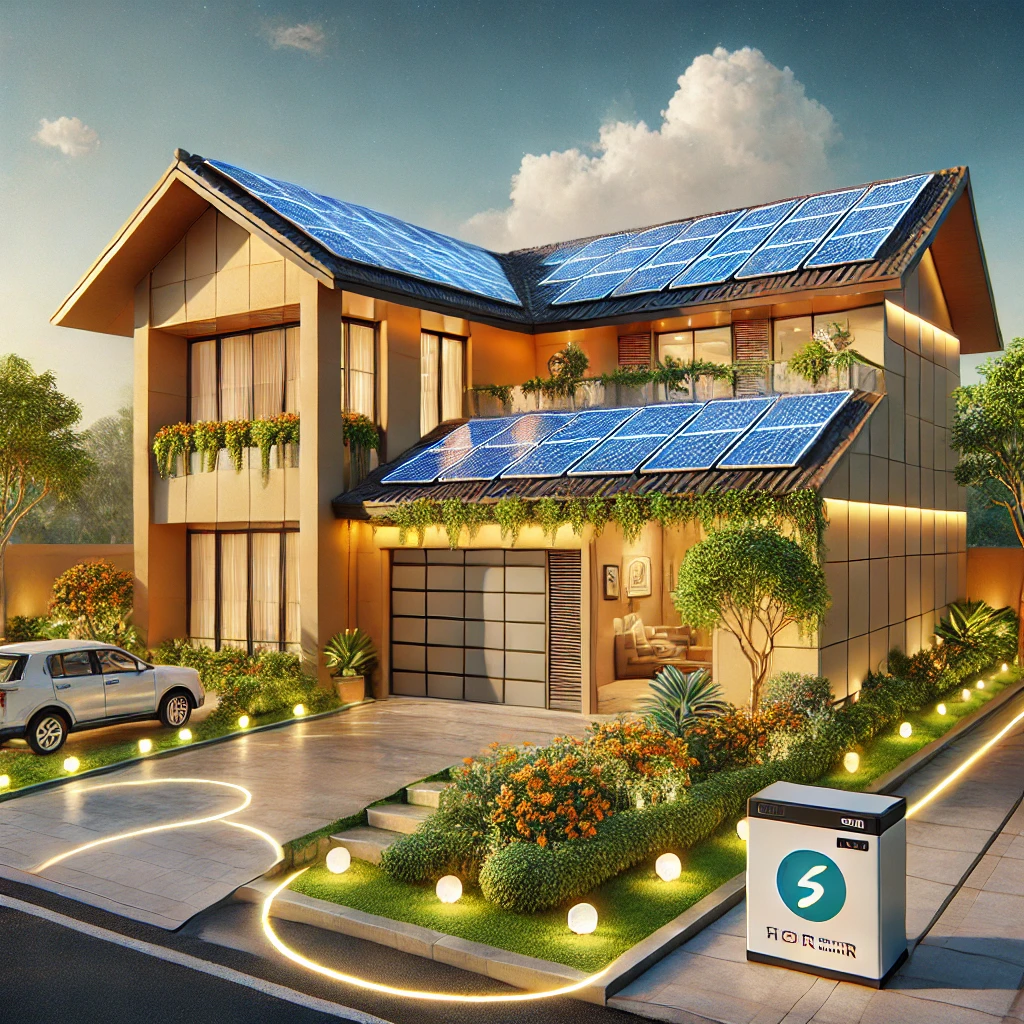
Can Solar Panels Replace Generators?
In many cases, the answer is yes.
A modern solar battery backup system or solar panels with battery storage can supply energy to most home appliances, reducing or eliminating the need for traditional fuel-powered generators. Unlike generators that rely on petrol or diesel, solar energy is quiet, clean, and renewable.
Advantages of solar panels over generators:
- No recurring fuel expenses and low maintenance
- Environmentally friendly with zero emissions
- Continuous power is possible with a home battery backup
- Silent operation compared to noisy generators
It’s important to size your system correctly. Homes with high electricity usage may require a larger solar battery storage system or additional storage to fully replace a generator.
What Size Generator Is Needed for a 2000 sq. ft Home?
A typical 2000 sq. ft. home in India uses about 8–10 kW of electricity per day, depending on the number of appliances, lighting, and air conditioning units.
To meet this demand, a 10–12 kVA generator would be needed, which can power several appliances simultaneously.
Disadvantages of generators:
- High operational costs due to fuel consumption
- Regular maintenance is necessary
- Noise and environmental pollution
By contrast, a solar backup system for the home offers a quiet, sustainable, and cost-effective energy solution without fuel-related expenses.
How Many Solar Panels Are Required for a 2000 sq. ft Home?
If you are asking how many kW to run a 2000 sq ft house or how many solar panels to run a 2000 sq ft house, most homes need approximately 20–25 panels (330–400W each) to cover daily electricity consumption.
Factors affecting panel requirements include:
- Electricity usage: More appliances and AC units increase demand.
- Sunlight availability in Indore: More sunlight reduces the number of panels required.
- Panel efficiency: Higher efficiency panels produce more energy in the same space.
- Battery storage: A larger battery backup for solar panels reduces dependence on the grid.
With the right configuration, a solar battery backup or solar panels with battery storage can reliably run lights, fans, AC units, refrigerators, and other essential appliances, even during prolonged power cuts.
How Long Can a 1000 Watt Solar Generator Run a Refrigerator?
A standard refrigerator consumes around 150–200 watts per hour. A fully charged 1000-watt solar generator can operate it for roughly 5–6 hours.
Tip: Solar generators or a home battery backup are excellent for short-term use, emergencies, or essential appliances. For whole-home coverage, a solar battery storage system is the smarter solution.
Comparing Generators and Solar Panels
| Feature | Generators | Solar Panels with Battery Storage |
| Cost | High running cost (fuel) | Higher initial cost, minimal running cost |
| Accessibility | Readily available | Requires professional installation |
| Convenience | Can run anytime, noisy | Silent, automated, low maintenance |
| Environmental Impact | Polluting | Renewable and eco-friendly |
| Backup Duration | Continuous if fuel is available | Limited by solar battery backup |
| Lifespan | 5–10 years with maintenance | Panels: 20–25 years, home battery backup: 5–15 years |
| Noise Level | Loud | Silent |
Why Solar Panels Are a Better Choice
- Cost Efficiency: Though upfront costs are higher, solar panels with battery storage reduce electricity bills and remove fuel expenses.
- Environmentally Friendly: Solar power lowers carbon emissions and supports sustainable living.
- Durability: Properly maintained solar battery storage systems last for decades, unlike generators requiring frequent upkeep.
- Expandable: A solar backup system for the home can be scaled as your energy needs grow.
Investing in a home solar panel system in Indore ensures consistent power, protects your home for the future, reduces your carbon footprint, and makes energy usage more predictable and economical.
To explore the best solar solutions for your home, contact Indian Solar Solution at +91-094248 36103 or email indiansolarsolution@gmail.com. You can also visit their office in Indore at 9930 Spaces, 202-A, near Rajiv Gandhi Square, Mangal Nagar, Indore, Madhya Pradesh 452014 for a personalized consultation.