
How to Choose the Right Solar System for Home in Tamil Nadu
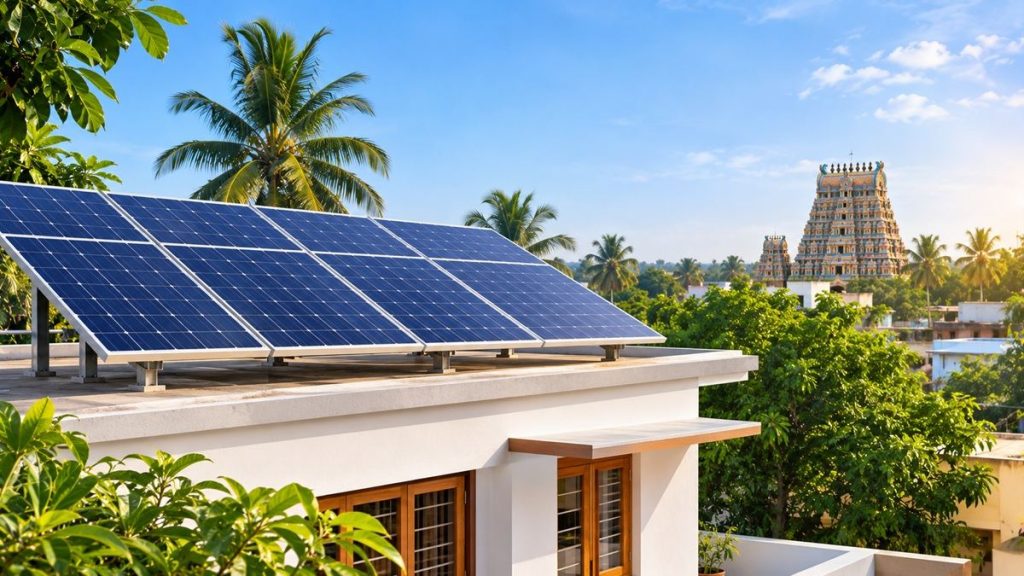
Electricity bills in Tamil Nadu tend to rise just when you need power most: during hot afternoons, long fan and AC hours, and busy family evenings. Many homeowners now ask the same question: which setup will actually save me money? At Indian Solar Solution, we help families answer it. This guide walks you through choosing the right solar system for home in Tamil Nadu, from sizing to subsidies, in plain language.
What Is a Solar System for Home in Tamil Nadu?
It is a set of solar panels, an inverter and mounting and wiring equipment that converts sunlight into electricity for your house. Most homes use rooftop panels, so you generate power right where you use it.
Why Tamil Nadu Is a Good Fit
The state receives strong sunlight through most of the year. That is why solar panel in Tamil Nadu has grown across cities and smaller towns alike, from Chennai and Coimbatore to Madurai and Tiruchirappalli.
How Does a Home Solar System Work?
The process is simple.
- Panels absorb sunlight and produce DC electricity.
- The inverter converts it to AC power for your appliances.
- Your home uses solar power first.
- Surplus power can go to the grid through net metering, where applicable.
Three System Types
- On-grid: linked to the grid with no batteries. It is the most affordable and popular choice.
- Off-grid: uses batteries and suits areas with frequent power cuts.
- Hybrid: combines grid and battery backup for the best of both.
How to Choose the Right System: A Step-by-Step Approach
Step 1: Study Your Electricity Bills
Check your average monthly units over the last six to twelve months. Your consumption decides your ideal system size.
Step 2: Check Your Roof
As a rough guide, each kilowatt (kW) needs around 100 square feet of shadow-free space. Direction, tilt and nearby trees or buildings all affect output.
Step 3: Pick the Right Capacity
Many Indian homes work well with 2 kW to 5 kW systems. A 3 kW system often suits a household using about 300 units a month, but a proper site survey gives a more accurate answer.
Step 4: Compare Panel Types
- Monocrystalline: higher efficiency, ideal when roof space is limited.
- Polycrystalline: budget-friendly, needs slightly more space.
Look at Warranties
Good panels typically carry long performance warranties, and inverters usually have a shorter product warranty. Ask for these in writing.
Step 5: Think About Local Conditions
Coastal areas bring humidity and salt, so corrosion-resistant mounting structures matter. In dusty or windy areas, strong structures and regular cleaning protect performance.
Why the Right Choice Matters
An undersized system leaves you paying high bills. An oversized one wastes money. A poorly installed one may underperform for years. Getting the match right means faster payback and steady savings for 25 years or more.
Key Benefits of Going Solar at Home
- Lower electricity bills: every unit you generate is one you don’t buy.
- Government support: schemes like PM Surya Ghar: Muft Bijli Yojana offer subsidies for eligible residential rooftop systems. Terms change, so please check current details before applying.
- Protection from tariff hikes: your generation cost stays stable.
- Low maintenance: panels have no moving parts and need only periodic cleaning and checks.
- Higher property appeal: a solar-powered home is attractive to buyers.
- Cleaner living: you cut your carbon footprint every day.
Common Challenges and Misconceptions
“Solar doesn’t work on cloudy days.”
Output drops, but panels still produce power. Over a year, Tamil Nadu’s sunshine delivers strong results.
“The upfront cost is too high.”
Subsidies, bank finance options and long-term savings make it more manageable than most people expect.
“Every installer is the same.”
Quality varies. Component choice, wiring, structure strength and after-sales care all shape your results.
Thinking of Starting a Solar Business?
Some readers ask about a solar panel business in Tamil Nadu. The state’s growing demand creates real opportunities, but it starts with understanding the technology. If you are a homeowner, the same principles in this guide apply to you.
Why Homeowners Trust Indian Solar Solution
- Free site survey and bill-based system sizing.
- Quality components with clear warranties.
- Transparent quotes with no hidden costs.
- Help with approvals, net metering and subsidy paperwork.
- After-sales and maintenance support to keep your system performing.
Conclusion
Choosing a solar system for home in Tamil Nadu comes down to a few smart steps: understand your bills, check your roof, size the system correctly, compare panel options and pick an installer you trust. Do these well and you can enjoy lower bills, steady power and cleaner energy for decades.
Ready to find the right fit for your home? Contact Indian Solar Solution for a free assessment and a clear, no-pressure quote.