
Why Manufacturing Units Prefer Rooftop Solar Over Ground-Mounted Systems
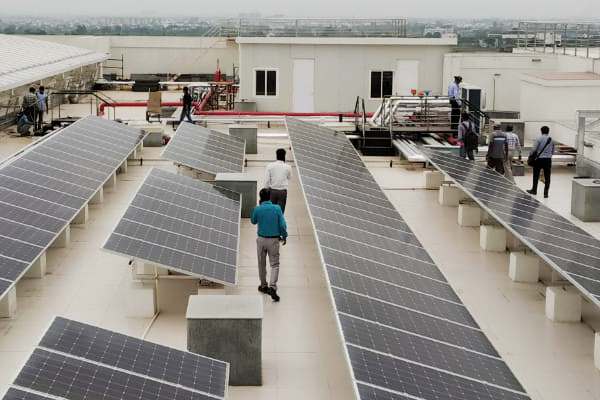
In today’s high-energy-demand industrial environment, manufacturing units across India are aggressively shifting toward renewable energy. Among all solutions available, rooftop industrial solar systems have become the top choice—especially for factories, warehouses, production plants, and industrial estates.
Industries are not just looking for sustainability; they are looking for cost reduction, energy independence, and long-term stability in operational expenses. This is where rooftop solar stands out. In cities like Indore, where industrial clusters and manufacturing zones are growing rapidly, the demand for industrial solar installation in Indore has seen a massive rise.
Let’s understand why manufacturing units prefer rooftop solar over ground-mounted systems, and how this choice results in higher efficiency, better ROI, and smoother long-term performance.
1. Rooftop Solar Utilizes Dead Space—No Extra Land Required
Land is one of the biggest cost factors for industries. Many manufacturing units operate on tight land layouts, where every square foot is used for operations, storage, or logistics.
Rooftop industrial solar systems utilize the existing, unused roof area, resulting in:
- Zero land acquisition cost
- No relocation of machinery, material yards, or workflow
- No disruption to production layouts
- Faster installation and minimal approvals
For cities like Indore, where industrial land prices are rising, rooftop solar becomes the most practical and cost-effective choice.
2. Lower Cost of Installation and Faster ROI
Compared to ground-mounted systems, rooftop solar installations cost significantly less. Manufacturing units prefer them because:
- No civil foundation work is needed
- Lower labor and material costs
- Easier and faster installation
- Reduced cable lengths and infrastructure costs
Rooftop solar systems offer ROI within 3–4 years, depending on the system size and energy consumption pattern. With an industrial solar system, companies typically save 40–60% on electricity costs, pushing profits upward consistently.
3. Industrial Solar Subsidy Makes Rooftop Projects More Attractive
Industries investing in solar can benefit from multiple government incentives, tax benefits, and accelerated depreciation policies.
While direct subsidy is not available for most commercial or industrial users, the central government promotes industrial solar through:
40% Accelerated Depreciation (AD)
This allows industries to reduce their taxable income by claiming depreciation on solar assets, making rooftop solar financially attractive.
Reduced GST Rates
GST on solar components is lower than many other industrial assets.
State Policies Supporting Industrial Solar Installations
Several states, including Madhya Pradesh, offer supportive policies for net metering and open-access solar, making rooftop solar even more beneficial.
As a leading EPC provider, Indian Solar Solution ensures that industries get maximum benefit from industrial solar subsidy schemes and government policies.
4. Maintenance Is Easier and Cheaper
Industrial rooftops are usually flat or slightly sloped—ideal for solar system installations. They make maintenance activities effortless such as:
- Cleaning panels
- Inspecting cables
- Monitoring inverter performance
Rooftop solar typically experiences less dust accumulation compared to ground installations, especially in manufacturing zones where heavy vehicle movement stirs dust.
This reduces operational costs and increases system performance over time.
5. Higher Energy Efficiency and Lower Transmission Losses
One of the biggest advantages of rooftop solar is proximity to the load center.
Because the system is installed close to the machinery and internal power distribution lines:
- Energy travels shorter distances
- Transmission and distribution losses are significantly lower
- System efficiency increases
For industrial operations with heavy machinery, reducing power loss directly improves cost savings.
6. Net Metering Benefits for Manufacturing Units
Most rooftop installations support net metering, allowing industries to:
- Sell excess power back to the grid
- Offset daytime consumption
- Reduce monthly electricity bills drastically
In regions like Indore, net-metering policies are stable and industry-friendly, making rooftop solar extremely beneficial for manufacturers running operations during the day.
7. Better Structural Control and Safety Solutions
Manufacturing units often have large, strong RCC or metal-sheet roofs designed to handle heavy loads. With the right engineering and EPC partner, these roofs can easily accommodate industrial solar systems.
Modern rooftop solar mounting structures offer:
- Wind resistance
- Anti-corrosion design
- Optimal tilt angles
- Superior panel alignment
This results in higher long-term generation and improved system durability.
8. Ground-Mounted Systems Face More Practical Challenges
Although ground-mounted solar systems have their own advantages, manufacturing units often avoid them because:
- They require large land areas
- They face shading from surrounding buildings or trees
- They need heavy civil work and deep foundations
- There are additional fencing and security costs
- Land disputes or permission delays can occur
For industries looking for a hassle-free and fast solar installation, rooftop solar remains the smarter choice.
9. Rooftop Solar Helps Manufacturing Units Become Energy-Independent
With rising power tariffs and unstable grid supply in some industrial zones, energy independence has become a strategic goal for businesses.
Rooftop solar enables:
- Reduced dependency on the grid
- Stable power for machinery
- Predictable power costs for long-term budgeting
- Increased competitiveness in the market
For many manufacturing units, rooftop solar is not just a sustainability initiative—it’s a business strategy.
Conclusion: Rooftop Solar Is the Future of Industrial Power in India
Manufacturing units across India—and especially in emerging industrial hubs like Indore—are choosing rooftop industrial solar systems because they deliver the perfect balance of cost savings, high performance, fast ROI, and minimal land requirements.
With expert engineering, quality installations, and skilled maintenance, Indian Solar Solution ensures that every manufacturing unit gets maximum output from its investment. Whether you are looking for:
- Industrial solar system installation
- Industrial solar installation in Indore
- Government-backed industrial solar subsidy guidance
Indian Solar Solution provides end-to-end EPC services tailored to your energy needs.